Clipdex page for "Hughes, Kimberley J"
- Name:
- Hughes, Kimberley J
- Nickname:
- Kim, Claggy
- Date of Birth:
- 26 Jan 1954
- Gender:
- Men
- Place of Birth:
- Margaret River, WA, Australia
- Career:
- Teams:

Kim Hughes: Tearful Departure of an Australian Captain

- Howstat Statistics:
- Test Career
ODI Career
- External Links:
- https://en.wikipedia.org/wiki/Kim_Hughes
https://www.espncricinfo.com/cricketers/kim-hughes-5724
- These links all related to externals sites, over which CricketCrowd has no control.
- The links were accurate at the time CricketCrowd recorded them.
- Player profile:
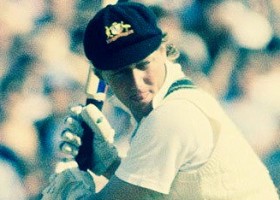
Kim Hughes: Elegant batsman, resigned from captaincy in a flood of tears
Kim Hughes was best known for his elegant stroke play and high-profile tenure as national captain during a challenging era. Born on 26 January 1954 in Margaret River, Western Australia, Hughes emerged as a prodigious batting talent in the mid-1970s. A right-handed top-order batsman, he was admired for his classical technique, wristy shots and fearless approach against fast bowling. He became a central figure in Australian cricket during the post–World Series Cricket rebuilding phase.
At international level, Hughes played 70 Test matches for Australia between 1977 and 1985, scoring 4,415 runs at an average of 37.10, including 9 centuries and 22 half-centuries, with a highest score of 213. In One Day Internationals, he appeared in 97 matches, amassing 1,977 runs at an average of 24.71, with 4 centuries and a top score of 138 not out. At first-class level, Hughes enjoyed an outstanding career, scoring over 24,000 runs at an average above 41, underlining his consistency and class across formats.
Hughes captained Australia in 28 Test matches, the only Western Australian to serve as Australia’s full-time Test captain, but his leadership coincided with a difficult transition period marked by strong opposition and internal pressures. His emotional resignation as captain during the 1984–85 season became one of the most memorable moments in Australian cricket history.
A defining and controversial chapter of Kim Hughes’ career was his prickly relationship with senior teammates Dennis Lillee and Rod Marsh, who openly opposed his captaincy. Both Lillee and Marsh were powerful figures in Australian cricket (and WA team mates) at the time and were sceptical of Hughes’ leadership style, believing him to be too emotional and tactically naïve. Their lack of public support undermined Hughes’ authority within the team, creating a divided dressing room during an already volatile post–World Series Cricket period. The tension reached its peak during the 1984–85 season, when Hughes’ emotional resignation as captain—made with Lillee and Marsh absent from the side—symbolised the personal and professional toll of leading Australia without the backing of its most influential senior players. The episode remains one of the most debated leadership conflicts in Australian cricket history.
After retirement, Hughes moved into commentary and media work and later became a sought-after speaker, openly discussing mental health and personal resilience. He is remembered as a gifted batsman whose career combined technical brilliance, courage, and the intense demands of leadership at the highest level.
- Share with
- What are these?


| around the world |
|---|
|
|
|
| more... |


| CricketCrowd Articles |
|---|
|
|
|
| more... |


